
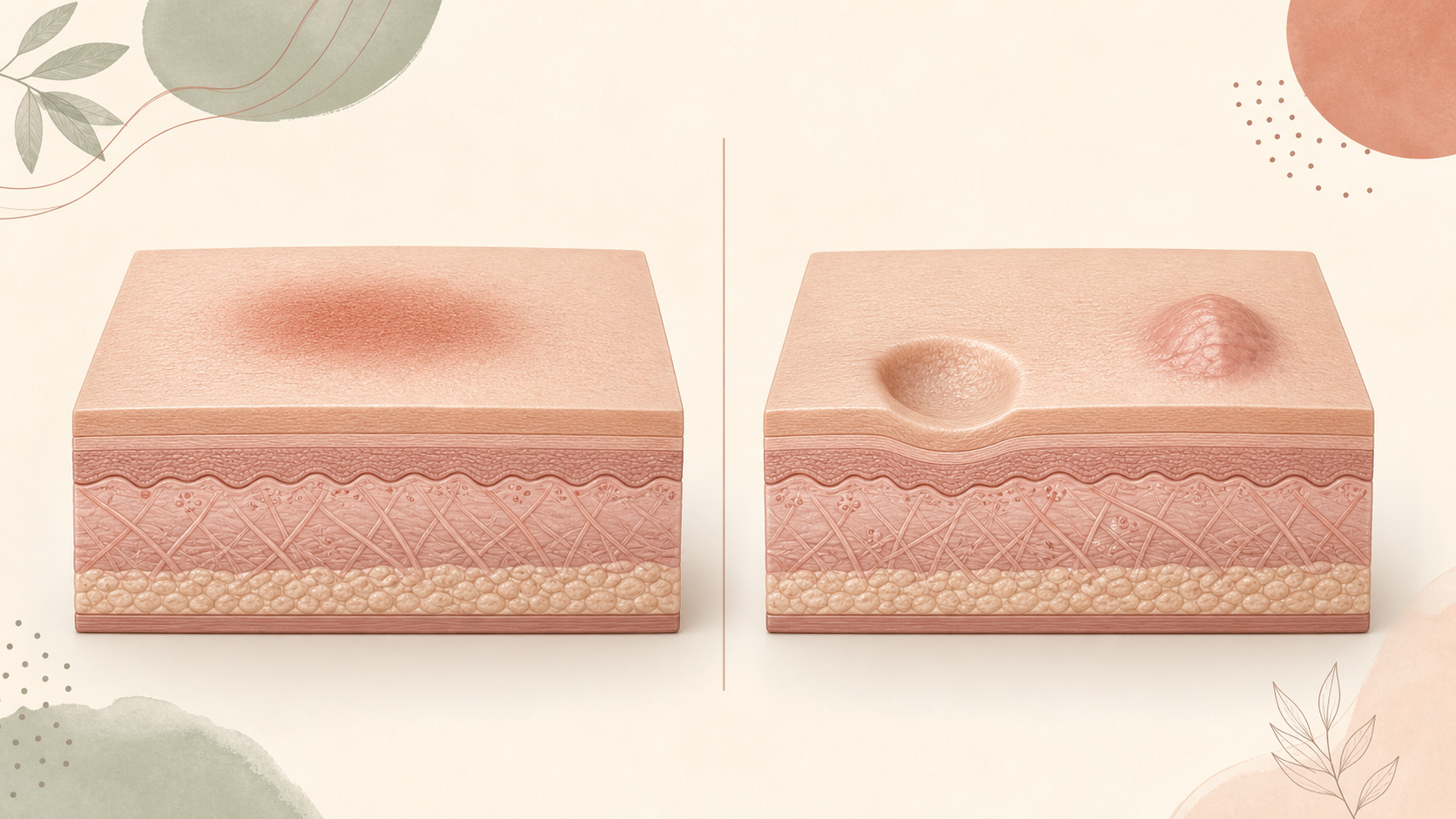
Acne marks and acne scars are not the same. A flat red, brown, or lighter patch is usually a change in skin colour after inflammation, while an acne scar changes the skin’s surface shape or texture. The distinction matters because colour changes and textural scars may need different approaches, and active acne should usually be addressed before scar care is planned.
This guide explains what to look for without asking you to diagnose your own skin. If you are unsure whether a mark is flat, indented, or raised, a medical assessment can help clarify the next step.
Quick takeaways
- Acne marks are usually flat. They can look red, pink, brown, grey-brown, or lighter than the surrounding skin, but the skin surface remains level.
- Acne scars change texture. They may appear as pits, depressions, uneven contours, or raised areas.
- One person can have both. Colour changes may sit alongside atrophic or raised scars.
- Active acne comes first. Ongoing inflammation can create new marks and scars while older concerns are being managed.
- Treatment depends on the finding. Skin tone, scar type and depth, active acne, sensitivity, and previous treatment all affect suitability.
The main distinction: a colour change can remain level with the skin, while a scar changes the contour or depth of the surface.
What is an acne mark?
An acne mark is usually a flat area of colour left after a spot or inflamed breakout settles. The surface may feel smooth even when the colour remains visible. Dermatology references describe these post-inflammatory changes as erythema, hyperpigmentation, or hypopigmentation, depending on the colour and the way the skin has responded to inflammation.
Common examples include:
- Red or pink marks: areas of lingering redness after inflammation.
- Brown or grey-brown marks: post-inflammatory hyperpigmentation, which can be more noticeable or longer-lasting in some skin tones.
- Lighter marks: areas of reduced pigment after inflammation or irritation.
The word “mark†is often used casually, so it does not tell you how deep the change is. The useful first question is whether the skin feels and looks flat, rather than whether the colour is light or dark.
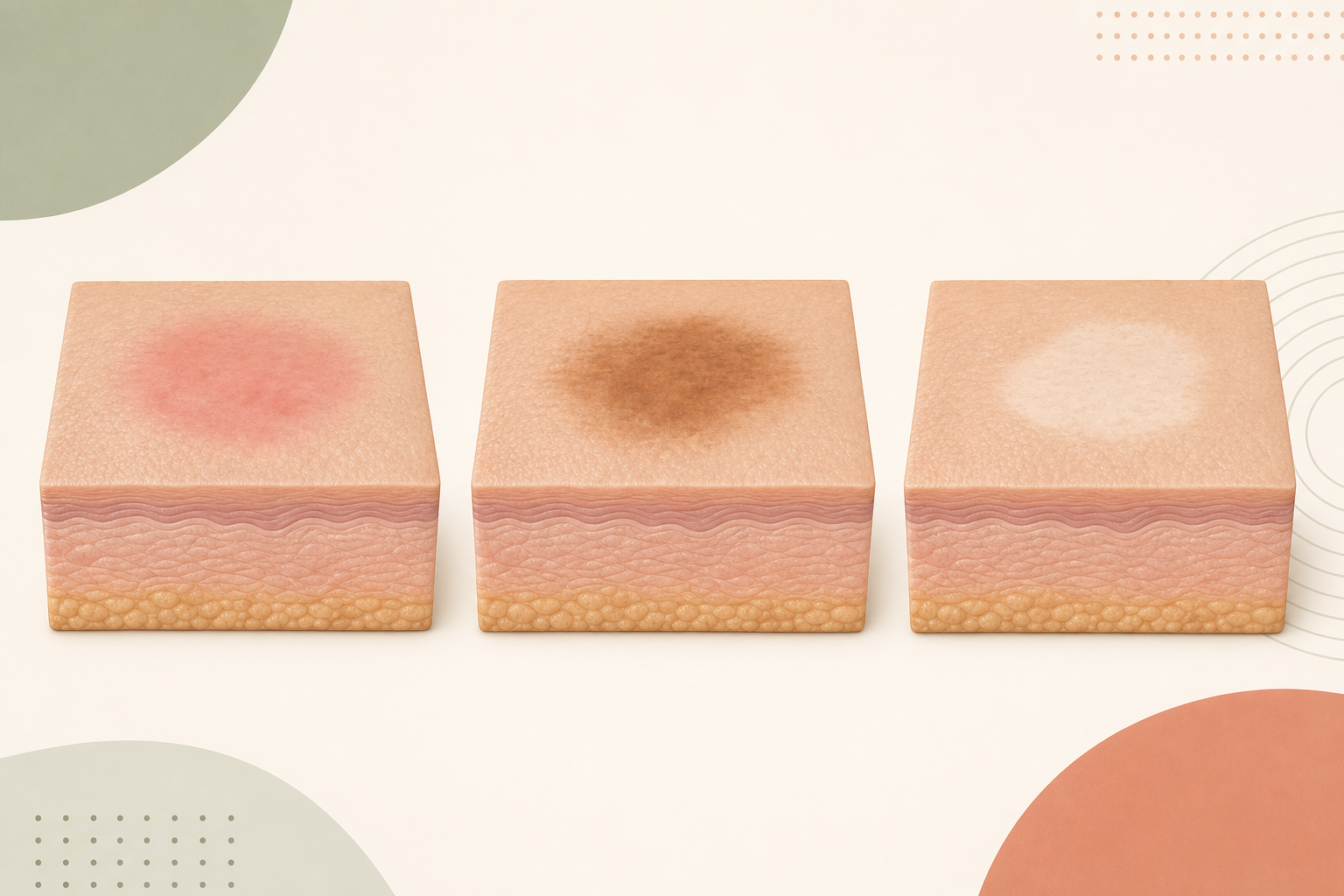
Flat red, brown, and lighter colour changes can look different from one another while remaining level with the surrounding skin.
What is an acne scar?
An acne scar is a structural change that forms as the skin heals after inflammation. Instead of changing colour only, the scar changes the surface contour. Most acne scars are atrophic, meaning the skin is depressed, while some scars are raised because of additional scar tissue.
Common atrophic acne scar types
- Ice-pick scars: narrow, deeper openings with a sharp edge.
- Boxcar scars: wider, round or oval depressions with more clearly defined edges.
- Rolling scars: broader depressions with sloping edges that can create an undulating surface.
Some people have a mixture of scar types. A scar can also appear alongside redness or pigmentation, which is why looking only at colour can be misleading.
Raised scars, including hypertrophic or keloid-type scars, are less common but important to assess carefully. A raised area that continues to change, becomes uncomfortable, or extends beyond the original acne spot should not be self-treated aggressively.
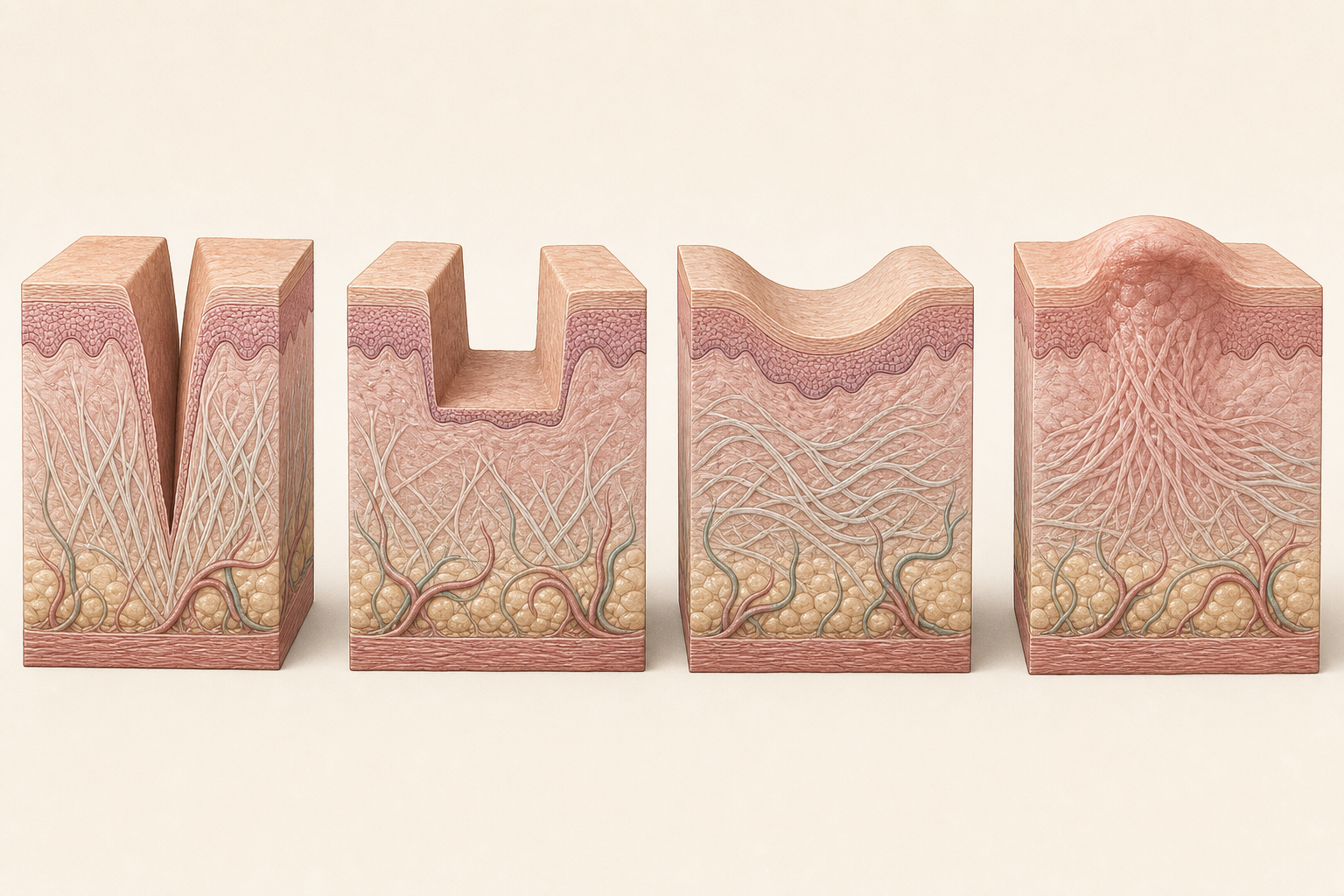
Acne scars can differ in width, depth, edge, and direction of change. These differences affect how a doctor thinks about assessment and treatment planning.
How can you tell a mark from a scar?
You can start by considering colour and texture separately. This is only an orientation step, not a diagnosis.
1. Look at the colour
A red, pink, brown, grey-brown, or lighter patch may be a post-inflammatory colour change. Colour can remain after the active spot has settled, especially when the original inflammation was deeper or the skin is prone to pigmentation.
2. Check whether the surface is level
If the skin looks and feels smooth when you lightly run a clean fingertip over it, the concern may be mainly colour. If you can see or feel a depression, sharp opening, uneven contour, or raised area, there may be a textural scar component.
3. Notice what happens under gentle side lighting
A flat mark tends to remain a colour difference when the light direction changes. A depression or raised scar can create a small shadow or highlight because the contour changes. Do not press, scratch, squeeze, or repeatedly inspect the area, because irritation can worsen inflammation and pigmentation.
4. Consider whether there is still active acne
If new inflamed spots are appearing, the priority may be acne control rather than treating an old mark or scar in isolation. Treating the active condition can help reduce the chance of repeated inflammation creating new colour changes or scars.
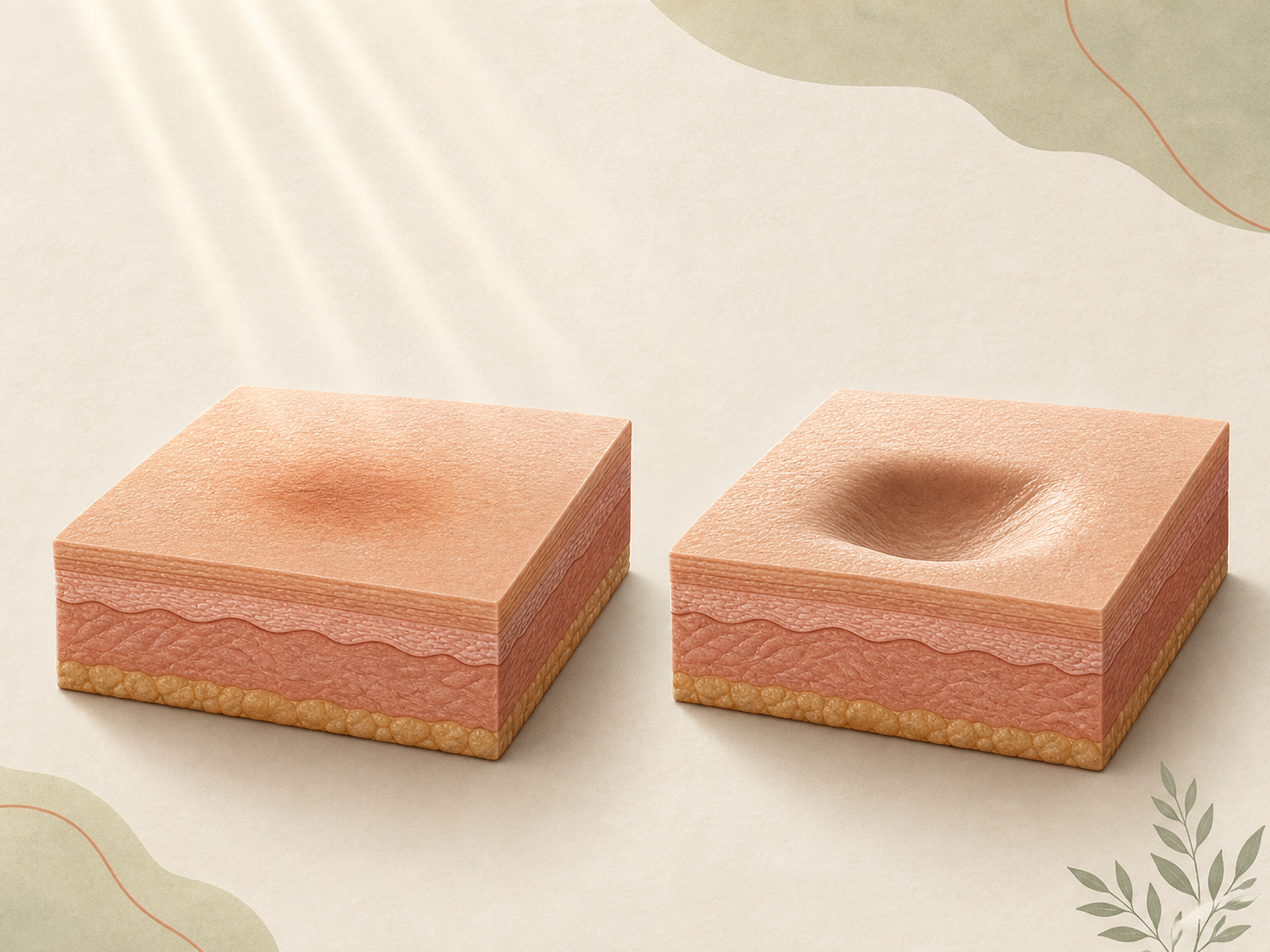
Side lighting can make texture easier to notice, but it cannot replace a clinical assessment.
Why skin tone and inflammation matter
Post-inflammatory pigmentation can occur in any skin tone, but it may be more noticeable and persistent in darker skin. The risk of pigmentation changes also matters when considering procedures that intentionally affect the skin. This is one reason treatment selection should take account of baseline skin tone, sensitivity, inflammation, and previous reactions.
The same-looking brown patch may not have the same cause as a shallow indentation. Conversely, a pitted scar may be easier to notice when redness or pigmentation around it has settled. A useful assessment separates colour, texture, and active inflammation instead of grouping everything under the word “scar”.
Unsure whether you have a mark, a scar, or both?
A consultation can help separate colour, texture, active acne, and sensitivity before you decide what to ask about next.
What happens next if it is a mark or scar?
The next step depends on what is present and what is still active. A clinician may consider:
- Acne activity: whether new breakouts, painful lesions, or recurrent inflammation need attention first.
- Colour change: whether the concern is redness, brown pigmentation, or a lighter patch.
- Texture: whether the scar is ice-pick, boxcar, rolling, raised, or a combination.
- Skin context: baseline skin tone, sensitivity, eczema tendency, current products, medication, and previous procedures.
- Practical considerations: treatment intervals, expected downtime, aftercare, and whether a staged plan is more appropriate.
Possible treatment categories may include skincare guidance, selected superficial chemical peels, resurfacing or energy-based procedures, and scar-specific procedures such as subcision. These options are not interchangeable, and suitability depends on the assessment. Feel free to read our earlier articles on chemical peels, subcision scar treatment, and radiofrequency-based scar options provide background on individual modalities.
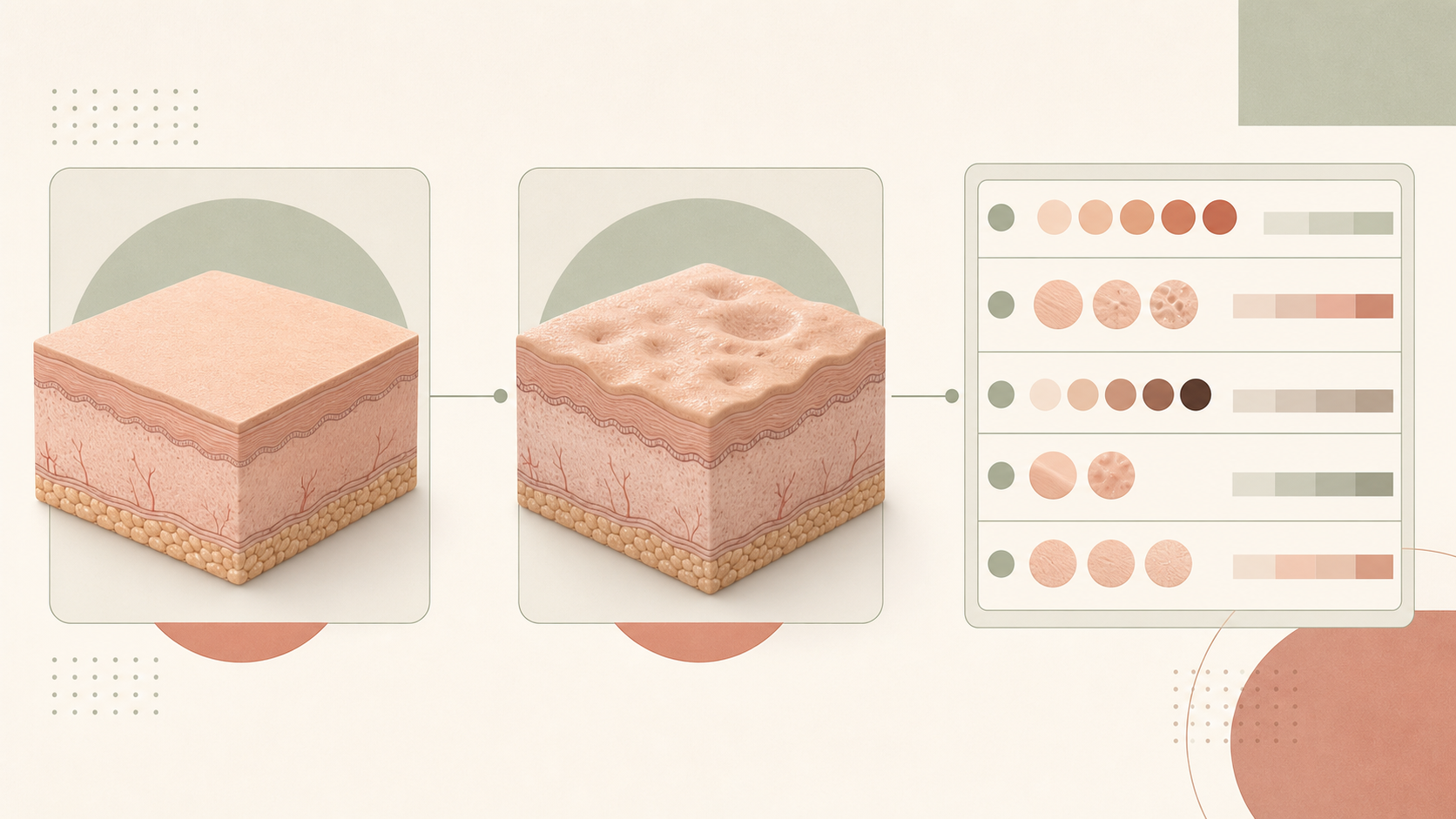
A treatment plan may need to account for colour, texture, active acne, skin tone, and sensitivity before a modality is selected.
When should you seek an acne-scar assessment?
Consider asking for medical guidance if a concern is painful, repeatedly inflamed, changing shape, raised, leaving new marks, or not improving with a consistent routine. An assessment is also useful when you cannot tell whether the issue is pigmentation or texture, or when you are considering a procedure for acne scarring.
For broader information about acne types, treatment pathways, and when to see a doctor, read our Acne Treatment & Acne Scar Care hub. You can also take a look at Understanding Acne: Myths and Management with Dr Handry for general acne-management context.
Explore the wider clinical services pathway if you are comparing treatment categories.
Acne marks and acne scars FAQ
Are red or brown spots after acne always scars?
No. Red or brown spots are often flat post-inflammatory colour changes, but a person can have both colour changes and textural scars. The key distinction is whether the surface contour has changed.
Can an acne mark become an acne scar?
A flat colour change does not automatically turn into a scar. However, continuing acne inflammation, picking, or repeated injury can contribute to new scarring. New breakouts should be managed while older marks or scars are being assessed.
Do acne scars have to be indented?
No. Many acne scars are depressed, such as ice-pick, boxcar, or rolling scars, but raised hypertrophic or keloid-type scars can also occur.
Can chemical peels help acne marks or scars?
Selected superficial peels may be considered for some acne-prone skin or colour and texture concerns, but they are not suitable for every person or every scar type. A clinician should assess active inflammation, sensitivity, skin tone, and recent skincare or procedures first.
Should active acne be treated before acne scars?
Usually, active acne should be brought under better control before a scar-focused plan is started. Ongoing inflammation can create new marks and scars, so the sequence matters.
Further reading
- DermNet: Acne scarring
- DermNet: Postinflammatory hyperpigmentation
- American Academy of Dermatology: Acne Resource Center
- Acne Scarring – Pathogenesis, Evaluation, and Treatment Options
If you are unsure whether you are dealing with an acne mark, acne scar, or both, you can book a consultation or message the clinic team for appointment guidance.
Want help identifying your acne marks or scars?
Message the clinic team for appointment guidance and discuss which assessment pathway may fit your skin concerns.

Sammi Toh
Freelance Writer

