
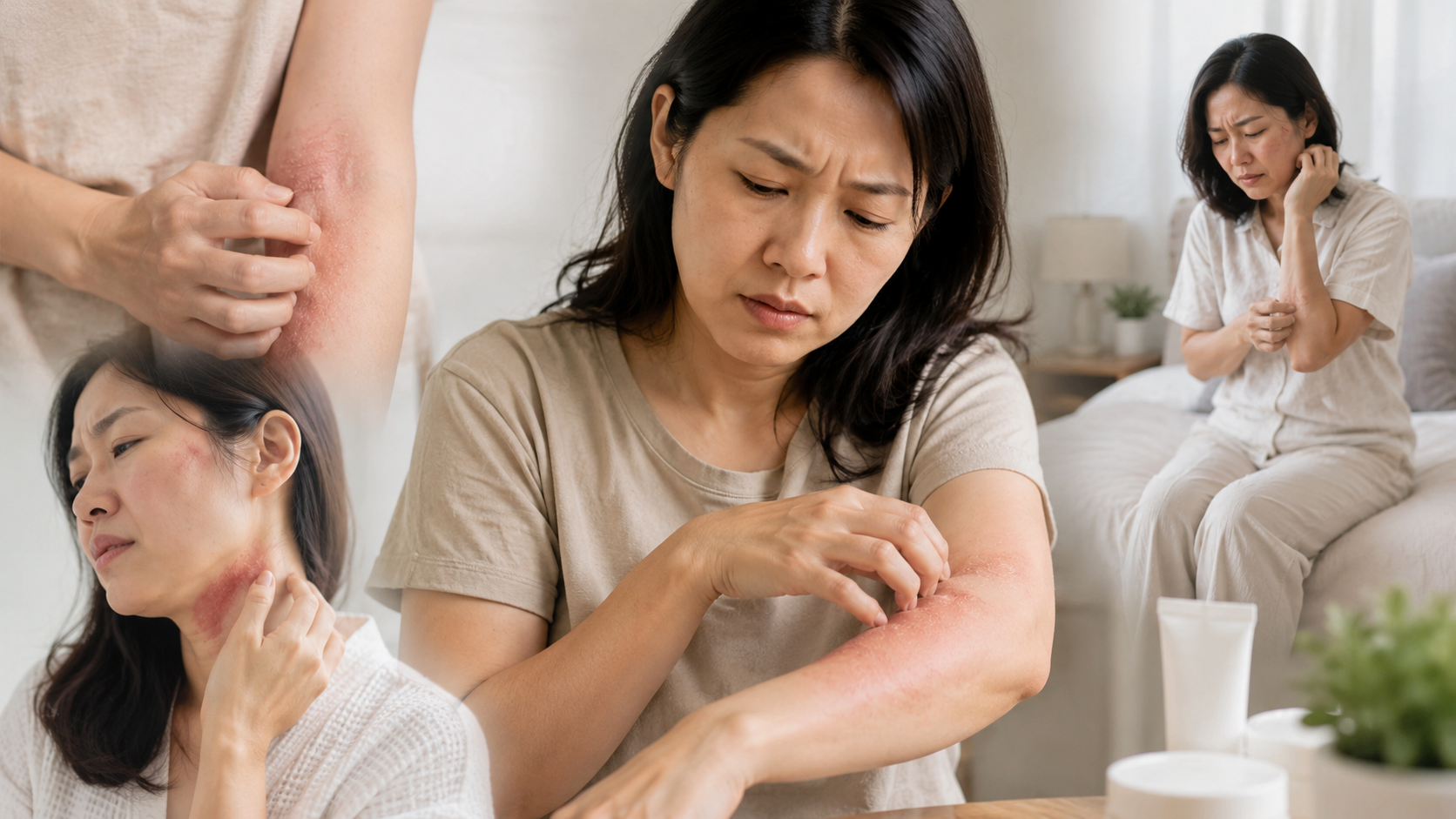
Eczema is a recurring dry, itchy, inflamed skin condition that often needs both medical assessment and consistent daily skin-barrier care. In Singapore, heat, sweat, air conditioning, detergents, allergens, and infection can all make eczema-prone skin harder to manage.
Niks Maple Clinics can assess eczema-prone skin, advise on suitable treatment pathways, and guide you on maintenance skincare that supports dry, sensitive skin. This page is a resource hub and does not replace a doctor’s assessment, especially if skin is painful, infected, rapidly worsening, or not improving with routine care.
Need Help With Eczema?
If your eczema is persistent, spreading, painful, weeping, or affecting sleep, message the clinic team for appointment guidance. We can help direct you to the suitable clinic path.
What is eczema?
Eczema is an inflammatory skin condition where the skin barrier becomes dry, reactive, itchy, and easily irritated. Atopic dermatitis, also called atopic eczema, is one common form and may be associated with a personal or family history of sensitive skin, asthma, or allergies.
Eczema may appear as dry patches, redness, roughness, scaling, itch, or scratched inflamed areas. It can affect the face, neck, elbows, wrists, ankles, hands, body folds, or larger areas depending on age, triggers, and severity.
Why eczema flares can keep coming back
Eczema tends to recur because the skin barrier, immune response, and triggers all interact. A flare may settle and then return when the skin becomes dry again or when a trigger causes irritation.
- Heat, sweat, and sudden temperature changes.
- Dryness from air conditioning.
- Scratching, which can break the skin barrier.
- Strong soaps, bubble baths, perfumed products, or detergent residue.
- Dust mites, pollen, food sensitivities, or other allergens in some people.
- Stress and poor sleep.
- Bacterial infection, especially when skin is scratched, weeping, crusted, or painful.
The practical goal is not just to calm one flare. It is to reduce repeated irritation by combining suitable medical care, daily moisturising, gentle cleansing, and trigger awareness.
When should you see a doctor for eczema?
You should consider a clinic consultation when eczema is persistent, severe, infected, affecting daily life, or unclear in diagnosis. A doctor can check whether the problem is eczema, another rash, contact allergy, fungal infection, psoriasis, scabies, or a different skin condition. Hence, we encourage booking a consultation if you encounter any of these symptoms:
- The rash is painful, swollen, hot, weeping, crusted, or has pus.
- Itch is affecting sleep, school, work, or mood.
- Eczema involves the face, eyelids, hands, genitals, or large body areas.
- A baby or young child has widespread eczema.
- Over-the-counter moisturisers are not enough.
- You are using steroid creams repeatedly without a clear plan.
- The rash keeps returning after short-term improvement.
How Niks Maple Clinics can support eczema-prone skin
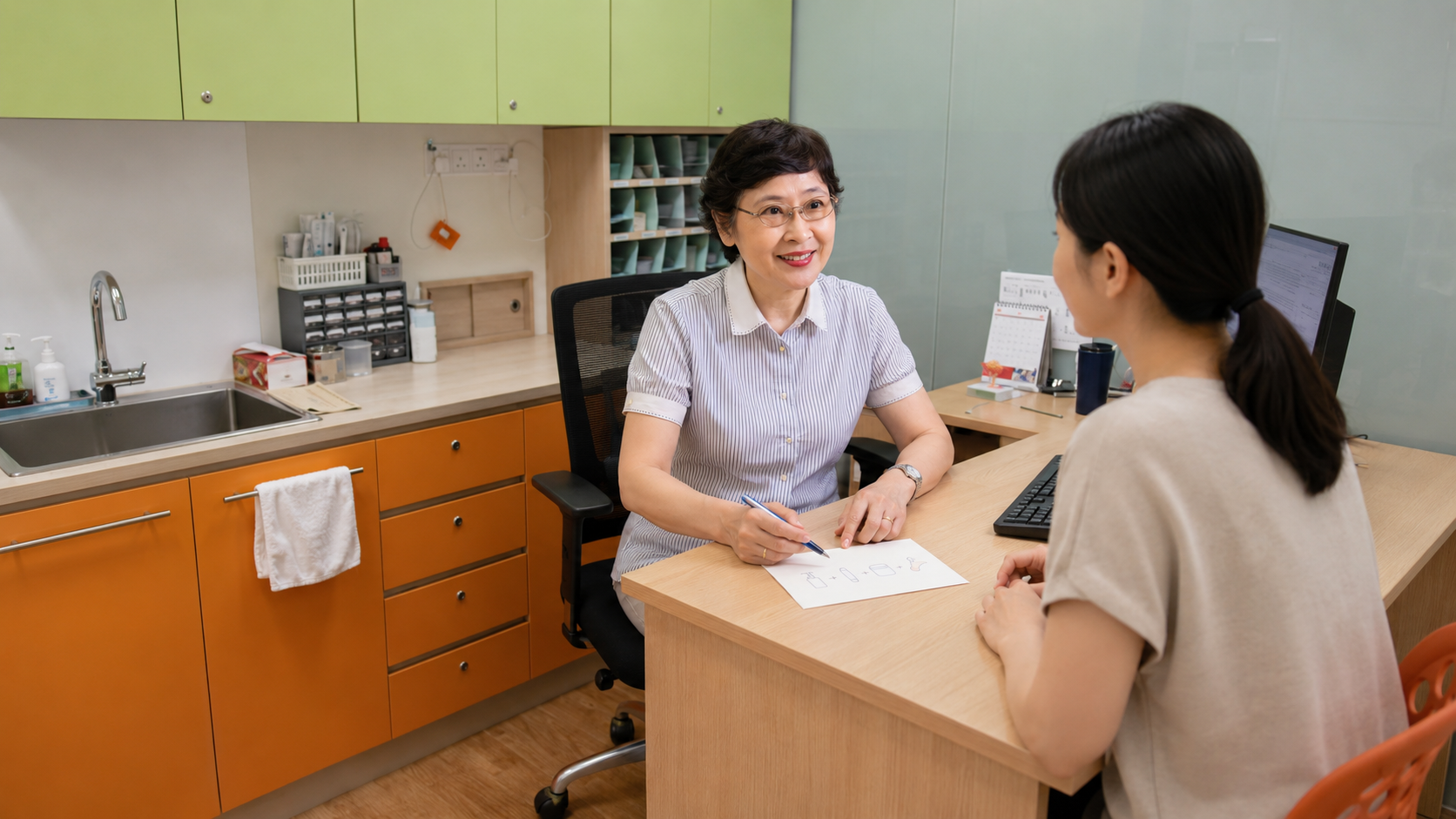
Niks Maple Clinics can help eczema search users move from guessing to a clearer care plan. A consultation may include assessment of the rash pattern, possible triggers, infection signs, skincare routine, and whether prescription medication is needed.
- How to repair and maintain the skin barrier.
- Which cleansers and moisturisers are suitable for dry, sensitive skin.
- Whether anti-inflammatory medicine is needed for a flare.
- Whether infection needs treatment.
- How often to moisturise and when to review.
- Whether a child, adult, or sensitive-area rash needs a more cautious plan.
Results and timelines vary. Eczema management often takes consistency, review, and adjustment rather than a one-time fix.
Daily eczema care: the basics that matter
Daily eczema care usually starts with gentle cleansing, frequent moisturising, and avoiding known irritants. These steps sound simple, but consistency is often what helps reduce repeated dryness and itching.
- Use a gentle, soap-free cleanser rather than harsh or strongly fragranced washes.
- Moisturise after showering and whenever skin feels dry.
- Keep nails short to reduce damage from scratching.
- Wear breathable clothing where possible.
- Avoid hot showers.
- Use gloves for household chores if detergents or cleaning chemicals trigger hand eczema.
- Wash bedding regularly if dust mites are a trigger.
- Review skincare products when flares happen after new products.
For some people, eczema care also includes prescription medication during flares. That should be guided by a doctor, especially for children, facial eczema, eyelid eczema, or recurrent infection.
Medical Help Or Product Guidance?
Eczema-prone skin may need medical assessment, maintenance moisturising, or both. Chat with us before guessing between over-the-counter care and a clinic consultation.
Niks products related to eczema-prone, dry, and sensitive skin
Niks has products positioned for dry, itchy, sensitive, or eczema-prone skin. These are included here as resource links, not as a replacement for medical care.
Product suitability still depends on a person’s skin condition, age, affected area, allergies, and current flare severity. If your skin stings, worsens, weeps, or becomes more inflamed after using any product, stop and seek advice.
| Product resource | How it may fit into eczema-prone skin care |
|---|---|
| Niks Intensive Barrier Repair Cream 50ml / 100ml | Barrier-support moisturiser for dry or sensitive skin. |
| Niks Aroma Oatmeal Cream 150ml / 300g | Colloidal oatmeal moisturiser for itchy, dry, sensitive skin. |
| Niks Aroma Oatmeal Bath Oil 100ml / 500ml / 750ml | Soap-free body cleanser with colloidal oatmeal, oat kernel protein, and mineral oil. |
| Niks Barrier Repair Spray | Moisture mist for dry or sensitive skin. |
| Niks Moisturizing & Repair Cream 50g / 100g | Moisturiser for dry or sensitive skin. |
Browse Niks skincare resources through the Niks online shop.
Services and clinic resources for eczema users
Eczema users often need more than one type of support: medical assessment, ongoing skincare guidance, product selection, and practical trigger management.
Which clinic should you contact?
Niks Maple Clinics operate across Singapore, with different visit models. WhatsApp is the easiest starting point if you are unsure which clinic or doctor session is suitable.
- Niks Maple Clinic at Tampines: walk-in; no appointment necessary.
- Niks Maple West Clinic at Jurong East: walk-in; no appointment necessary.
- Niks Maple North Clinic at Yishun: walk-in, with appointments preferred; call before visiting when possible.
- Niks Maple Central Clinic at Orchard: by appointment only.
WhatsApp +65 8933 7921 is for messaging only. The team can help direct you to the appropriate clinic path. Response is typically within one business day.
Frequently asked questions about eczema
Is eczema contagious?
Eczema itself is not contagious. However, scratched or broken eczema-prone skin may become infected, and infected skin should be assessed by a doctor.
Can eczema be cured?
Eczema is usually managed rather than permanently cured. Many people improve with the right combination of trigger control, moisturising, and medical treatment during flares, but recurrence is possible.
Are moisturisers enough for eczema?
Moisturisers are important because they support the skin barrier, but they may not be enough during moderate, severe, infected, or persistent flares. A doctor can advise whether medication is needed.
Should I avoid all skincare if I have eczema?
You do not need to avoid all skincare, but eczema-prone skin often needs simpler, gentler products. Avoid introducing many new products at once, especially during a flare.
Can children use eczema products?
Some products may be suitable for children, but paediatric eczema should be managed carefully. Check with a doctor, especially for babies, widespread eczema, face or eyelid eczema, or repeated flares.
What should I do if eczema keeps coming back?
Book a medical review if eczema keeps returning despite moisturising and avoiding obvious triggers. Recurrent eczema may need diagnosis review, infection assessment, prescription treatment, or a clearer maintenance plan.
Arrange Eczema Appointment Guidance
If you are unsure whether your rash is eczema, whether it needs medication, or which Niks Maple Clinic to visit, message the clinic team for appointment guidance.

Ang Hwa Cheng Serene
Dr Ang Hwa Cheng Serene is a medical doctor with extensive experience in family medicine, family practice dermatology, and aesthetic medicine. She began her medical career in 1986, working in public hospitals for nine years before moving into community hospital practice and general practice. Since joining the Group in 1997, Dr Ang has focused on dermatology-related family practice and aesthetic treatments. She holds an MBBS and a Master of Medicine in Family Medicine from the National University of Singapore, and has Certificates of Competency in chemical peels, laser procedures, botox, and filler injections.

